

The Measure of a Cantaloupe
by Nancy Jorgensen
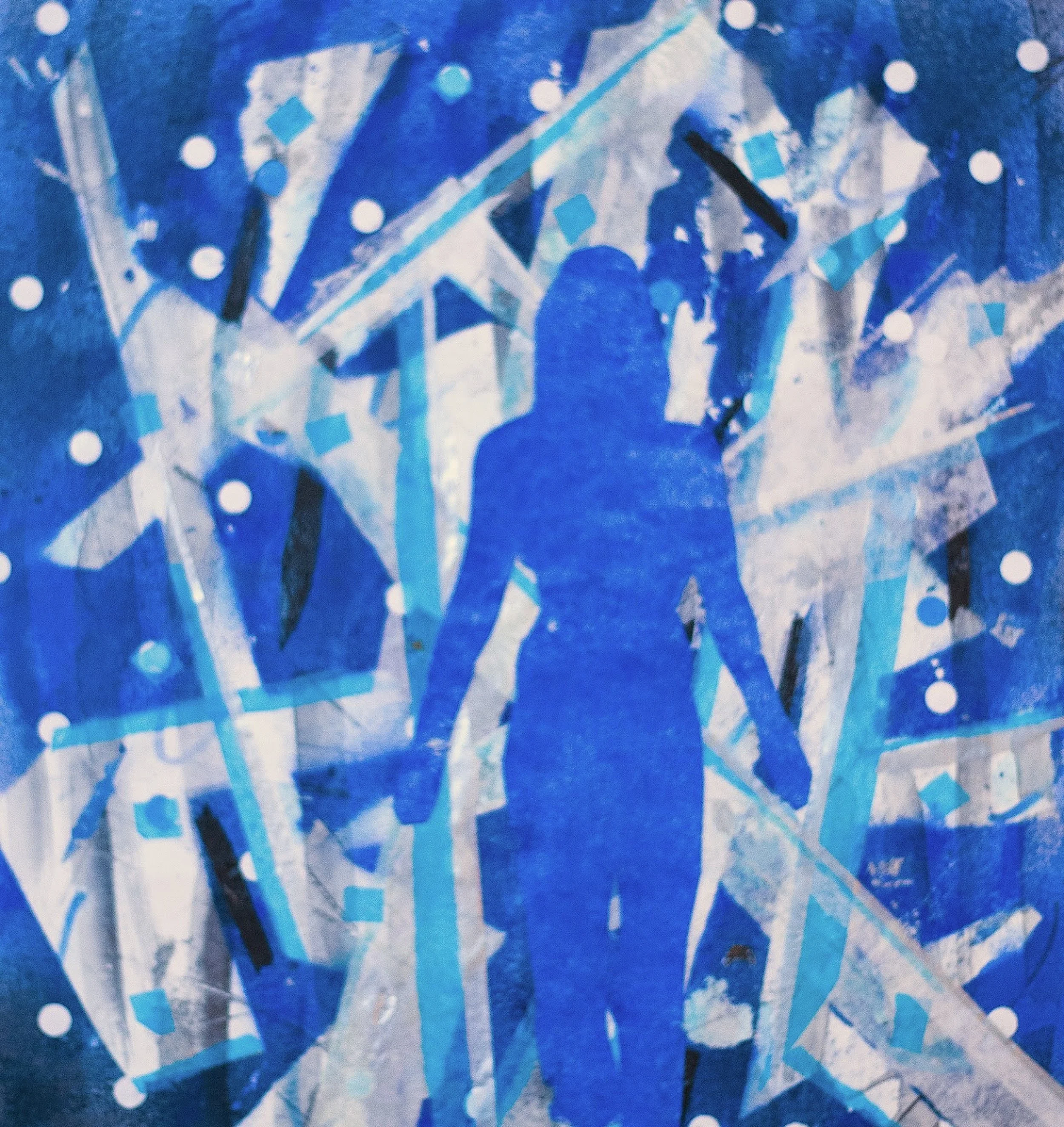
Art: “Threshold 11”
By G.J. Gillespie
I returned home from the farmer’s roadside stand with a cantaloupe—heavy, the size of a man’s head. I had hefted it from a bin stacked high with melons and run my palm across its rough, bumpy netting, held its stem end to my nose and inhaled.
From its exterior, a melon appears simple. But inside, it is unexpectedly complicated. From the rind inward, a rainbow of green, cream, honey, and pink emerges. Its core is a tangle of seeds and slippery fibers that ooze through the fingers. Its wedges are slippery in the hand but substantial in the mouth. And on the tongue, the flesh feels firm yet juicy, sweet yet tangy.
After I chose this melon, a teenager in overalls totaled my bill, adding a dozen ears of sweet corn, two heirloom tomatoes, and a carton of silky green beans. Then she directed a young boy, also in overalls, to retrieve a box of blueberries from the cooler. I wondered about the farmer, out in a field somewhere, who had masterminded this bounty, who knew the precise depth to plant a cantaloupe seed, the right amount of water to nourish without diluting flavor, the remedy for bugs and mites, and exactly when to harvest.
At my house, a backyard garden had underperformed, making me wonder how any farmer copes with long stretches of dry weather, ravaging storms, and intense heat. What do they do with tomatoes reduced to small, deformed knobs? Is there a market for cucumbers sporting a bulbous head full of seeds at one end, a skinny tail at the other?
To give my garden its best chance, I had set a timer for my soaker hose, bought fertilizer at the garden store, and pulled weeds when I spotted them. But I didn’t have a farmer’s sense. When a crop failed, I didn’t know what I didn’t know.
And I understood even less about the kind of people who can put a seed in the soil and end up with a field of corn. Before I bought my cantaloupe, I had snapped photos of the produce on display, amused by the childlike letters that misspelled every product - tomeatoes - canloup - kohlarbi - cutecumber - peache’s. I felt smugly superior. But those misspellings cost the farmer nothing, and my knowledge of how to spell tomatoes, cantaloupe, kohlrabi, and cucumber didn’t help me grow them.
When I returned to the farmer’s stand the following week, I headed straight for the mound of cantaloupe, searching for one as big as a man’s head, with an interior full of complexity.
Nancy Jorgensen is a Wisconsin writer, educator, musician, and blood donor. She is the mother of two daughters: a high school English teacher and the 2016 Olympic gold medalist in women’s triathlon. Her essays appear in HuffPost, Business Insider, The Offing, River Teeth, Wisconsin Public Radio, and elsewhere. Her most recent book is a middle-grade sports biography, “Gwen Jorgensen: USA’s First Olympic Gold Medal Triathlete” (Meyer & Meyer). Find out more at NancyJorgensen.weebly.com