

Ekphrastics
-
![]()
"Frog Prince" By Carella Keil
-
![]()
"The Frog’s Return” - Sophia Kurtz
-
![]()
Interview with Carella Keil
-
![]()
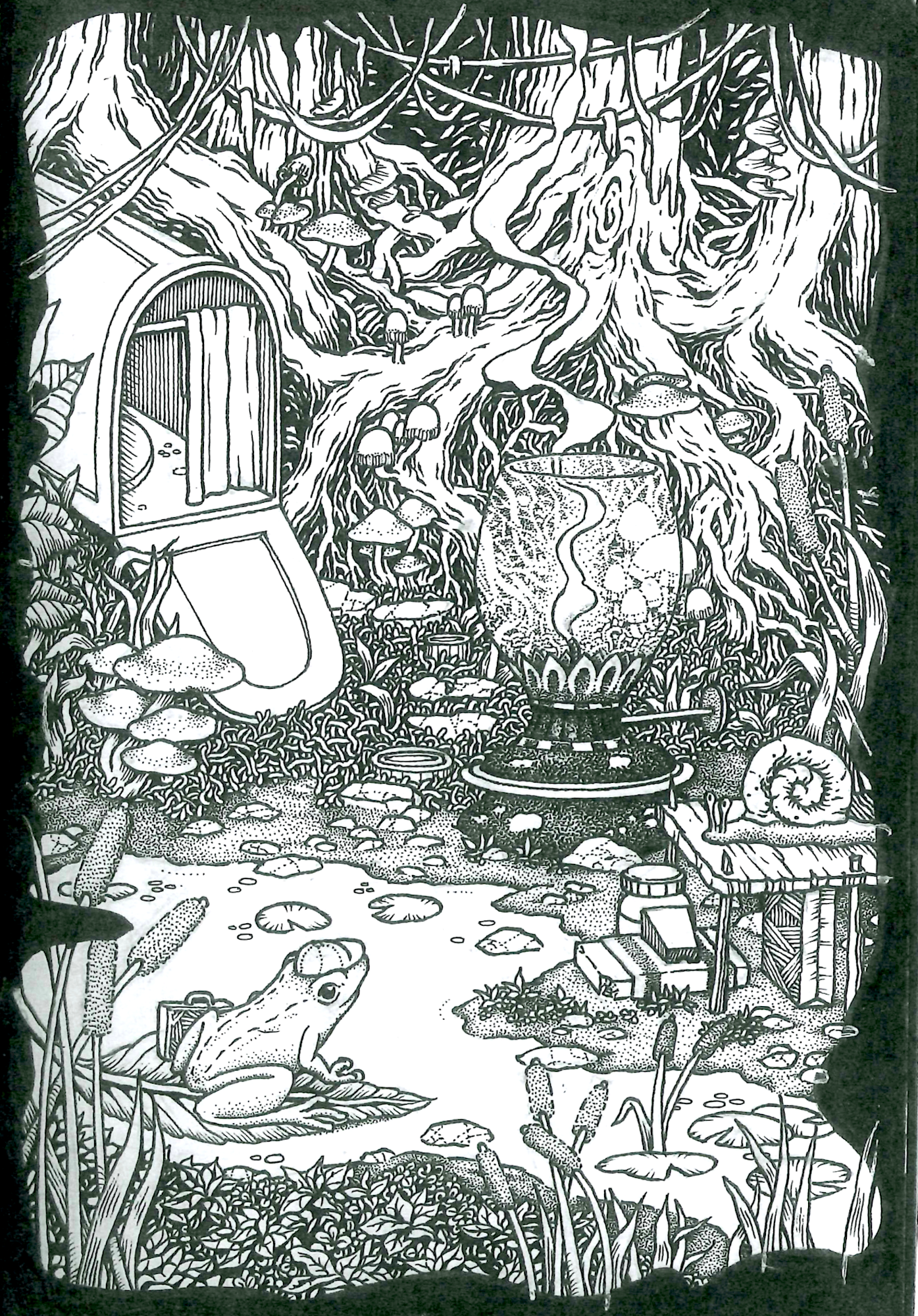
"The Frog's Return" - Sophia Kurtz
Interview with Carella Keil
1. Can you tell us the story behind “Frog Prince”? Where did the image and story begin?
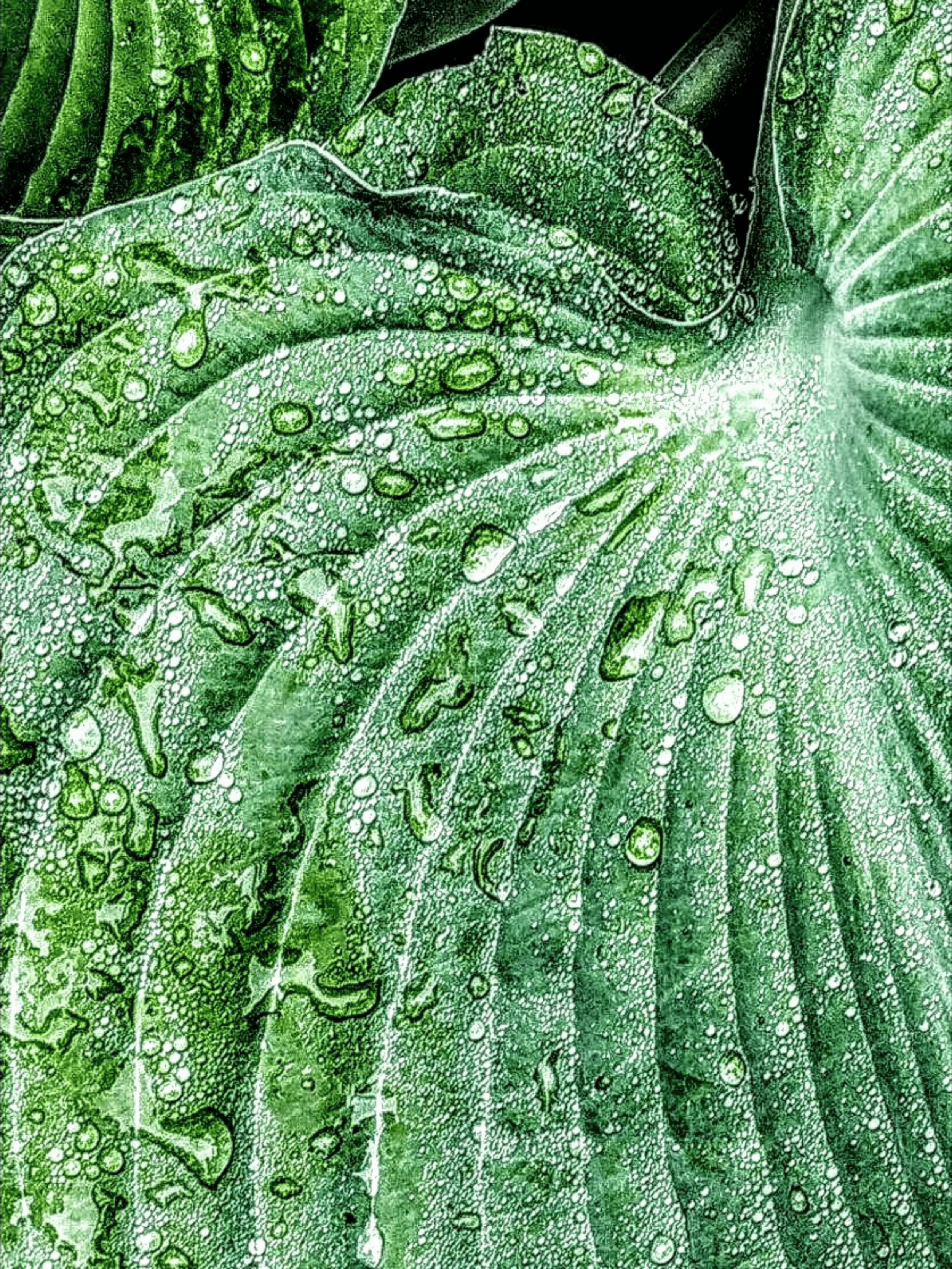
"Frog Prince" was captured on a photography retreat at a beautiful Victorian house and garden in New Brunswick. The series consists of floral photographs with a dark fairytale motif, so when it came time to name this piece the verdant colors made me think of a frog and the absent Prince.
2. Do you remember what it felt like to hear this piece had been chosen as Quibble’s front cover?
Was there a particular kind of surprise or satisfaction in seeing this image become the first threshold into JUNGLE?
I love how you describe the cover image as being the threshold into this issue, as the first step into a dense wilderness of creativity. I was absolutely floored to receive the news that not only had "Frog Prince" been selected, but it would be the cover art! The news came at a time when I was struggling creatively with the editing process of my poetry collection and two recently accepted short stories, so it provided a much-needed boost to my creative self-esteem. The care and enthusiasm with which Garrett approached this was infectious and made me very excited to be a part of this project!
3. One aspect I enjoy about "Frog Prince" is how its blurred realism and perspective smudges concrete details into abstract forms and textures- and then the title of the work invites us into fairy tale. How did you arrive at that leap from what we see to what the title asks us to imagine?
"Frog Prince" is part of a larger dark fairytale series, which consists of a wilting, rust-colored rose ("Belle"), headboards stacked against a rock cliff ("The Princess and the Pea") and a moss-covered wooden wheel ("Rumpelstiltskin"). When it came time to name this image the leap to "Frog Prince" felt intuitive. The textures and color gradients of the leaf conjure the essence of a frog, droplets of water waiting in suspense for a princess's kiss.
4. There’s no obvious prince here, and maybe not even an obvious frog. What interests you about letting the title transform the image rather than simply explain it?
For me the image is more an abstract idea, I like to play with surrealism in my work, the image in front of us melding into a poetic idea rather than a concrete visual portrayal.
5. What kind of atmosphere were you chasing when you made it?
A dreamy garden, misty slumber, haunting suspense and lush colors you can taste with all your senses.
6. In what ways or parts does this work evoke JUNGLE, to you?
The colors and subject of the image capture the lushness of a jungle, but beyond the physical, there is the idea of a hidden jungle of emotions, yearning and thoughts, the Prince that may never arrive or perhaps has already vanished, the unpredictability, the dangers and potential poison these literal and metaphorical jungles hold.
7. Tell me about the use of scale in your work. Do you often work by making the overlooked feel strange, mythic, or larger than itself?
I definitely like to capture and magnify the strange in images that are otherwise concrete, to take an every-day image and inject it with an element of dream, of the not-quite-real, to bend the viewer's imagination a little bit and allow them to peer into an alternate reality.
8. Quibble’s Featured Ekphrastics invite writers to respond directly to the cover art. What is it like to hand an image over to poets and prose writers, knowing they may find stories in it you never planned?
I am very excited for poets and writers to find stories in "Frog Prince" I never planned. I am delighted for my image and title to spark others' imaginations and to hear all the ideas it evokes! I love the collaborative process of this. For me true art is not what is simply on the page, but what is conjured in a reader and viewer's mind. We are the true works of art, and the permutations from a single image or idea are infinite.
9. What would you love for a writer to notice in this piece? And what would you be delighted for them to completely invent?
I would love to hear not only about the moment of the leaf, but it's past and future, what stories it is a part of, what the jungle contains and what kinds of fairytales it can be woven into. Already my mind goes to ideas of Jack and the Bean Stalk (or a stalker) and poison kisses, and I'm excited to see what the title and image evoke for others.
10. You also recently published a collection of poetry, Undercover Butterfly, with Dark Thirty Poetry Publishing. What has that process been like? When did it begin, and where is it now?
I was approached by Adam Shove, the founder and editor of Dark Thirty Poetry Publishing, in March 2025 to put together a poetry collection. The idea was intimidating but I knew I had to do it and that it was time. I have been publishing my poetry, stories and photographic art in literary journals for 4 years now, and with over two hundred publications and over a dozen cover art features, I knew it was time to consolidate some of my work into a book I could call my own. "Undercover Butterfly" is a personal inventory, a labyrinth of past heartaches and mental journeys, and now on the other side of it I feel ready to share this poetic and personal archive.
11. Does releasing writing feel different from releasing visual art, or are they part of the same creative weather?
Releasing writing feels extremely different to me than releasing visual art. Although a lot of my art is abstract portraiture, there is still a vulnerability and nakedness in writing that I don't find with visual art, even with very raw and personal images. I find art can be curated to evoke a certain emotion or draw the eye in a certain way, whereas with writing you are completely at the mercy of the reader's interpretation and taste. When I share my writing I feel like I am inviting the reader into a wound, and to dig around within it; with art, the wound may be there but it is no longer open, the very act of creating the image has sealed it for me.
12. What's something you wish you learned sooner?
Editing. Editing and more editing. I really underestimated the need for and power of editing while putting together my poetry collection, and going into my second book (a flash fiction collection) I realize how imperative this will be, not only for each individual piece but for flow and thematic consistency (and my publisher's sanity) throughout the pieces, and the importance of avoiding repetition and making sure each scene feels new and relevant to the reader.