

Floor
by Andrei romanov
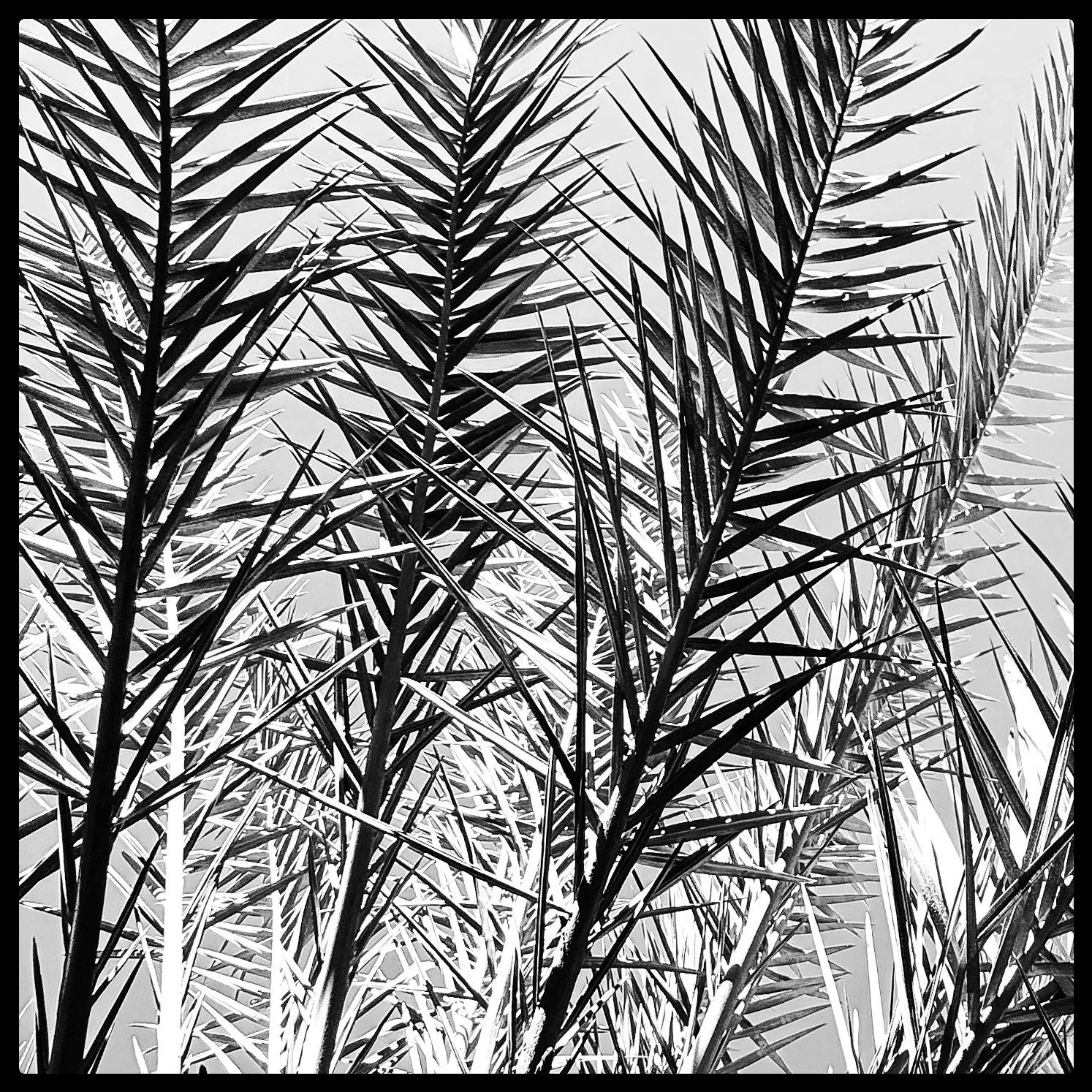
Art: “"It's a Jungle Out There”
By michael c. roberts
The scanner says it takes six seconds per item. The scanner does not say this in words. It says it in the gap between beeps, the interval the algorithm has decided is optimal for a human body to reach, grasp, scan, place, and move. Six seconds. If the gap stretches longer, the scanner does not beep again. It simply waits. Patiently. The way a predator waits. And somewhere above, in a place she has never seen and will never see, a screen changes color from green to yellow.
She does not want to see yellow.
Marina clocks in at 6:58 PM. Two minutes early because the walk from the lockers to her station takes four minutes, and her shift starts at 7:00, and starting at 7:01 is a point, and six points is a conversation, and she does not want a conversation. She ties her hair back. She puts her phone in the locker. She puts her water bottle in the locker. She is allowed to carry a clear water bottle on the floor, but last week, a woman on the east wall was written up for taking a drink that lasted longer than the algorithm considered reasonable, and Marina does not know how long that is and does not want to find out.
The floor is the size of eleven football pitches. She read that somewhere or someone told her, or maybe she invented it because the number feels right. Eleven football pitches of shelving rising three stories high, each shelf divided into bins, each bin containing objects that have no relationship to each other: a dog collar next to a bag of rice next to a vibrator next to a children's Bible. The sorting is not meant for human logic. It is meant for the algorithm's logic, which optimizes retrieval time based on frequency and proximity, and a dozen other variables that no one on the floor understands. The shelves are the canopy. They block the ceiling. They block the light. They create corridors so narrow that two pickers cannot pass without one pressing flat against the metal. The air between them is warm and still, smelling of cardboard and dust and the faint chemical sweetness of plastic wrap.
She walks to her station. The concrete floor is polished smooth, and her shoes are black, flat, the cheapest ones with arch support she could find, and make no sound. Around her, other bodies are moving to their stations. Nobody speaks. Not because speaking is forbidden, but because the energy required to form a sentence is energy subtracted from the six-second interval, and the body learns, quickly, to stop spending what it cannot afford.
The first order appears on the scanner screen. Bin 14-C-2207. She walks. Her feet know the route the way an animal knows a trail, not by thinking but by repetition, by the body's memory of turns taken four hundred times before. Left at the end of aisle 14. Twelve steps. Right. Eight steps. The bin is at shoulder height. She reaches. A phone case, transparent, for a model she does not own. She scans it. The scanner beeps. She places it in the yellow tote on her cart. She looks at the screen.
Next bin. 22-A-0914.
She walks.
The algorithm has plotted her path through the shelves in the most efficient sequence, which means she will walk between eight and twelve miles tonight. She does not know this because she is not wearing a fitness tracker. She is not allowed to wear a fitness tracker. She knows it because her knees tell her at 3:00 AM, when the shift enters its final quarter, and her body begins to report damage first to the left knee, then the lower back, then the balls of her feet, where the thin soles have compressed to nothing against the concrete.
But that is later. Now it is 7:14, and her body is still fresh, and the scanner is beeping at regular intervals, and the rhythm is almost pleasant, almost musical, a pulse she can match without strain. Reach. Grasp. Scan. Place. Walk. Reach. Grasp. Scan. Place. Walk. Her rate is 112 units per hour. The target is 100. She is safe. She is green.
A man passes her in aisle 19, pulling his cart in the opposite direction. She steps flat against the shelf, and he passes without looking at her. His badge says Tomás. She has seen him every night for three months and does not know his last name or where he is from. She knows he is faster than her and that his cart rattles because one wheel is damaged. He has not reported it because reporting things takes time, and time is units, and units are the only currency that matters here.
The currency is not money. She is paid 14 euros and 20 cents per hour before tax, but the currency the jungle runs on is rate. The rate is what the algorithm sees. The rate determines whether the screen stays green, turns yellow, or, if you are slow enough for long enough, turns red. She has never seen red. She has heard about red the way you hear about deep water or snakebite from people who have encountered it and survived, their voices low, their eyes careful.
At 9:00 PM, she gets a fifteen-minute break. She walks to the break room, a rectangular area of plastic chairs and vending machines in a corner of the warehouse, separated from the floor by a thin partition that does not reach the ceiling. The sound of the floor, the beeping, the rattling carts, and the hum of conveyor belts enter the break room without resistance. There is no silence here. Silence is not a species that survives in this ecosystem.
She sits. She eats a granola bar. She drinks water. Around her, other pickers sit in postures of collapse, heads back, mouths open, legs stretched out, arms hanging. Nobody looks at their phones because they're in the lockers. They look at nothing. They rest the way animals rest, not relaxing but conserving, banking energy for the next expenditure.
A woman next to her, whose badge says Katya, has taken off her left shoe and is pressing her thumb into the sole of her foot. Her face shows nothing. The thumb presses harder. Marina looks away.
At 9:15, the break ends. Nobody announces this. Bodies simply begin to stand, pulled upright by the knowledge that the scanner is waiting, that the clock does not pause, that every second spent sitting is a second the algorithm has noted and filed in whatever space algorithms keep their notes.
She returns to the floor. The shelves rise around her. She enters the corridors, and the corridors close behind her; she is inside them again, inside the system, a single organism moving through an ecosystem that was designed not for her comfort but for her output.
Bin 31-B-1440. A set of watercolor paints. She scans it, and for a half second, she looks at the box, a child's set, twelve colors, a brush included. The box shows a painting of a sunset done by a hand that was clearly an adult pretending to be a child. She places it in the tote. The scanner does not care what she thinks about the sunset. The scanner has already moved on.
Next bin.
The hours pass. They do not pass the way hours pass in other places, marked by events, by conversations, by changes in light. Here, the light does not change. The fluorescent tubes run along the ceiling in unbroken rows, emitting a frequency just slightly off, neither mimicking daylight nor admitting to being artificial. It is light from nowhere. It makes the skin look grey. It makes time feel like a substance you are wading through, thick, warm, resistant.
At 11:30, she gets her thirty-minute meal break. She eats rice and beans from a container she prepared at home seven hours ago. The rice is cold. She eats it anyway. Beside her, Tomás, with the rattling cart, sits down and opens an energy drink and drains it in one motion, his throat working, his eyes closed. He crushes the can. He does not look at her. She does not look at him. They are not colleagues. They are parallel organisms occupying the same habitat, following the same resource flows, governed by the same invisible force.
She returns to the floor at midnight. The midnight shift is the deep jungle, the hours when the body stops pretending it is natural to be awake and begins to resist. Her eyes itch. Her lower back has started its report. Her left knee submits its complaint. She adjusts her gait, shifting weight to the right, and the adjustment is automatic, something the body has learned to do without consulting the mind, like a tree growing around an obstacle.
Bin 07-D-3320.
She walks to aisle 7. She turns left. She counts steps. She reaches the bin, pulls out the item, and something happens.
The item is a package. A small brown box. Standard. But the shipping label shows the street name. Then the number. Then the city.
It is her street. It is her building. It is not her apartment number, but it is the apartment directly below hers, the one where the woman with the small dog lives, the woman who holds the elevator for her on mornings when Marina comes home and the woman is leaving for work, real work, daylight work, the kind where you sit at a desk. The screen you're looking at doesn't count your seconds.
She holds the box. She feels its weight. Light. Something small inside. A gift, maybe. Or a replacement part. Or something the woman ordered at 2:00 AM because she could not sleep, the way Marina orders things at 2:00 PM because she cannot sleep either, both of them feeding the same system from opposite ends of the clock, one of them clicking and the other one walking.
She holds it for three seconds.
The scanner does not beep. It waits.
Somewhere above, a screen changes from green to yellow.
She scans the box. She places it in the tote. She looks at the screen.
Next bin.
Her feet move. The corridor swallows her. The shelves rise on either side, tall and dense and full of objects that are traveling from nowhere to everywhere, each one touched briefly by a hand that will never be thanked, carried by a body that is losing something it will not get back, cartilage, time, the particular kind of energy that allows you to feel surprised.
She is not surprised. She has held neighbors' packages before. She has held packages addressed to her own mother. She once picked a toy that she had ordered for her nephew and recognized the wrapping she had chosen. She scanned it. She placed it in the tote. She kept walking.
The jungle does not pause for recognition. It does not pause for irony. It does not pause.
At 4:45 AM, she picks her last item. A bag of coffee beans. Brazilian. She can smell them through the packaging, dark and warm, and the smell is so out of place in the fluorescent nowhere of the warehouse that for a moment she feels something shift inside her, something loosen, like a root giving way.
She scans it.
She clocks out at 5:02 AM. Two minutes late because her last bin was at the far end of the floor, and walking back to the lockers takes four minutes, and the algorithm does not account for the walk back. She retrieves her phone. She retrieves her water bottle. She walks to the bus stop.
The sky outside is turning. Not light yet, but not dark. The air is cool, and it hits her face and her neck, and she breathes it in, and the breath is the first breath she has taken all night that was not measured.
The bus comes. She sits. She closes her eyes.
Behind her, the warehouse hums bright, tireless, and full.
Andrei Romanov is a Romanian-born writer and independent historian based in the Algarve, Portugal. He is the author of Masters of the Ocean Sea (2026), winner of the London Book Festival Award for General Nonfiction and the Pacific Book Award for Best Biography. His work is held in the permanent collections of the British Library, the Cambridge University Library, and the National Maritime Museum, Greenwich. His creative work appears or is forthcoming in Thin Places Literary Journal, Wordpeace, The Markaz Review, and Magpie Zine. Instagram: @andreiromanovauthor